NEW WEBSITE IS WORK IN PROGRESS
Inquiries: fexa@fumballyexchange.com | fexa.ie. | Follow on Insta
Frances Donnelly Jung, a passionate painter in oil who finds inspiration in nature and landscapes of Ireland.
Biography
Frances Donnelly Jung is an Irish artist based in Dublin. Born in County Down Northern Ireland, she has a BA(hons) in Fine Art from Belfast College of Art and an MA (Painting) from The Royal College of Art London. After an active career where she exhibited throughout The UK, Germany and Ireland, she took an extended hiatus in 2010 and returned to painting with renewed focus in 2020 at the time of the Covid pandemic. She has since participated in group painting exhibitions in Cork, Dublin and London and most recently at the Makowski gallery New York, Durden and Ray Los Angeles and is currently showing in ‘What remains visible’ at Marshall arts Memphis USA. Her work is held in public and private collections throughout Ireland, The UK, Germany and the USA. She is Co-curator at FEXA.
Artist Statement
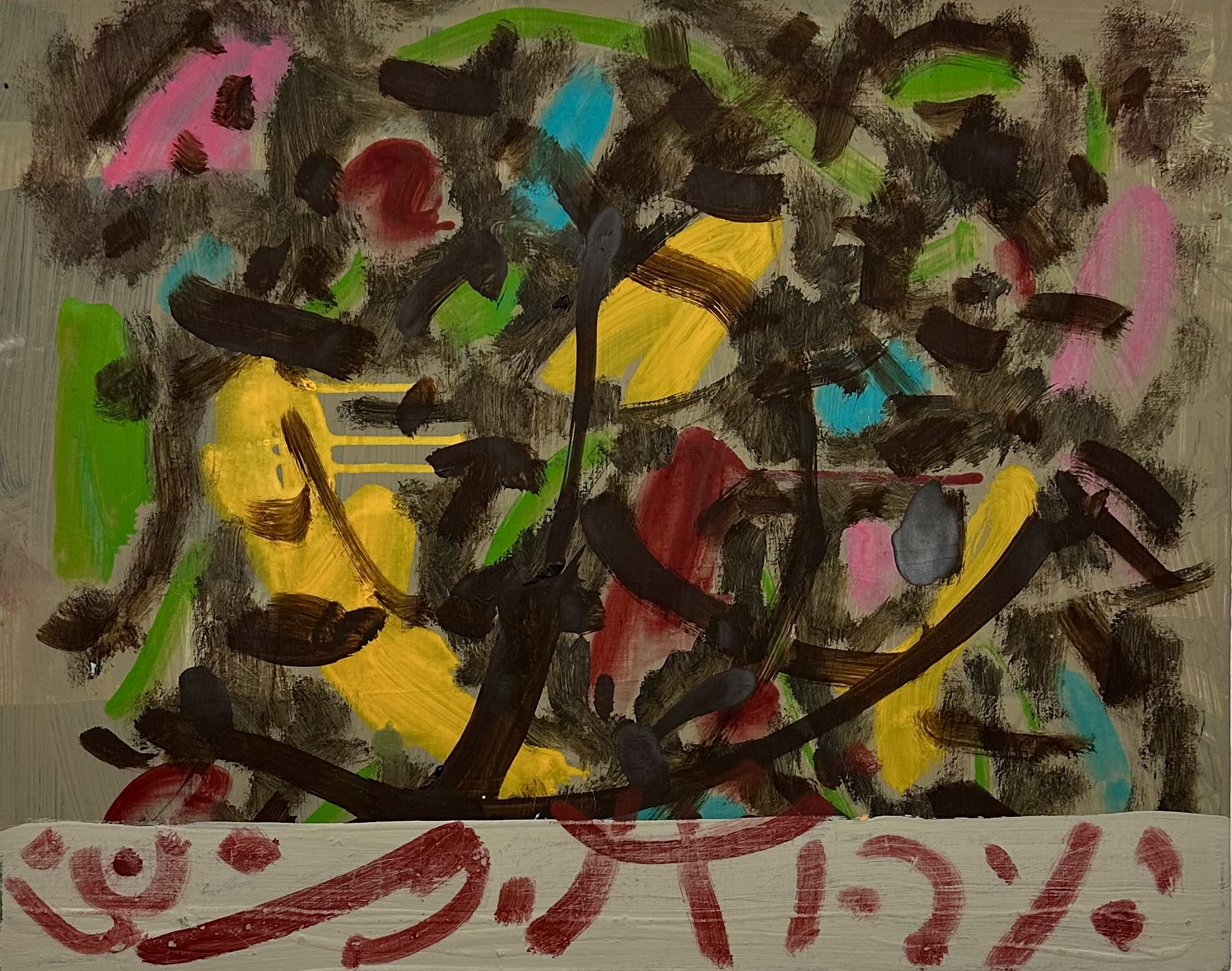
““Chance, gesture and the possibilities of oil paint play a large part in my approach to painting. Drawing on long walks in the Irish landscape and memories of the enchantment that wild country lanes held for me as a child, I don’t seek to represent nature, but forge what I see as a kind of landscape of the mind.
Post-war American Expressionism, Irish Neolithic rock carvings and the intuitive flow of drawing inform the work. Ancient undulating rhythms, lines and patterns have long been part of a universal understanding of nature, and that sense of timelessness and connection is what I seek to harness in my work.
The paintings’ first marks begin on the floor, and layers and erasure and re-applying can take months, sometimes years, to find a kind of resolution. By dividing the picture space into two or three sections, or creating a frame, like a picture within a picture, I want to create a dialogue between two opposing painting strategies: a deeply layered painted surface and a more intuitive gestural approach. In this way the space achieves a form of dissonance that I find interesting.
I think of it as remembering or seeing a place in a present time, but interpreting it in different ways, reflecting the multifaceted ways we experience the world.”